



More than a third of credit card holders have been targeted by fraud, according to data from a CardRatings credit card customer survey.
With fraud so commonplace, understanding your vulnerabilities — and knowing how to defend against unauthorized charges — is essential. Fortunately, the survey also reveals that you have a powerful ally in your corner: consumers report that credit card companies are highly effective at helping resolve fraud attempts.
Key findings: What the CardRatings survey reveals about credit card fraud
Here are some highlights of what the CardRatings survey found out about credit card fraud:
- 36.11% of those surveyed said they had been a victim of credit card fraud or attempted fraud
- Men were slightly more likely to report having been victims of credit card fraud
- People in their late 50s and early 60s are most likely to have been targets of credit card fraud
- All adult age groups reported significant levels of fraud activity
- 45.70% of people in the survey’s highest income group reported having been a target of credit card fraud, the highest incidence of fraud for any income group
- On a positive note, less than 12% of survey respondents who were targeted by scammers reported suffering any harm as a result
- 88% of respondents who were targets of fraud reported that they were pleased with how their credit card company resolved the situation
How commonplace is credit card fraud?
The survey asked current credit card customers the following: Have you been a victim of credit card fraud or attempted fraud?
Here’s how the results broke down:
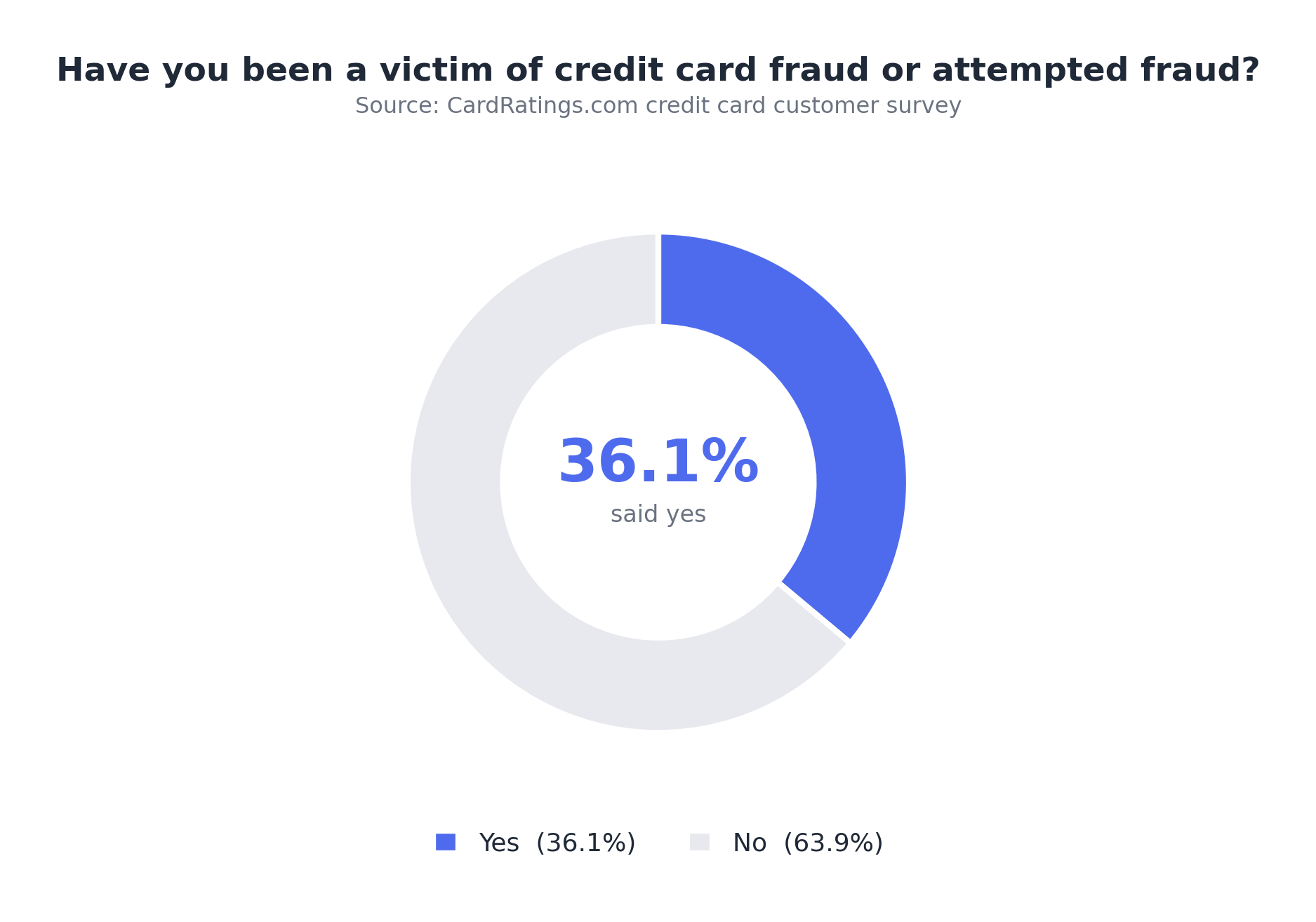
While most credit card customers have not yet been targeted by fraud, over a third of them have. That suggests there is a meaningful chance that anyone could become a victim of fraud eventually.
Who are the most likely targets of fraud?
All population groups in the CardRatings survey experienced significant levels of credit card fraud, but some groups were found to be the most likely targets.
Credit card fraud by gender
The percentages of men and women reported having been targets of credit card fraud were similar, with men slightly more likely to have had it happen to them.
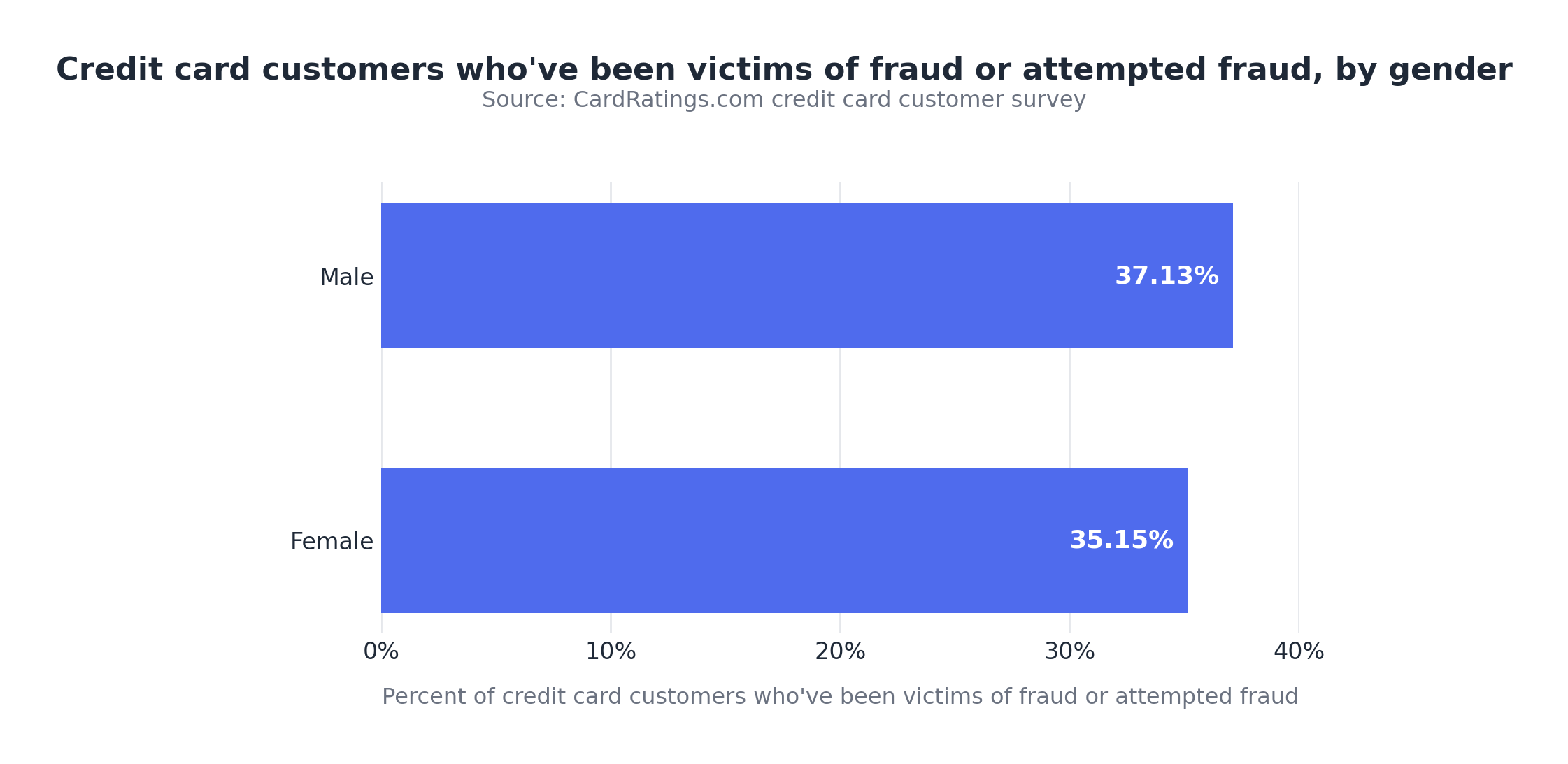
There isn’t a substantial difference between the above numbers, so men and women should be equally vigilant for signs of credit card fraud.
Credit card fraud by age
Across each age group, at least a quarter of credit card customers reported having been a target of fraud:
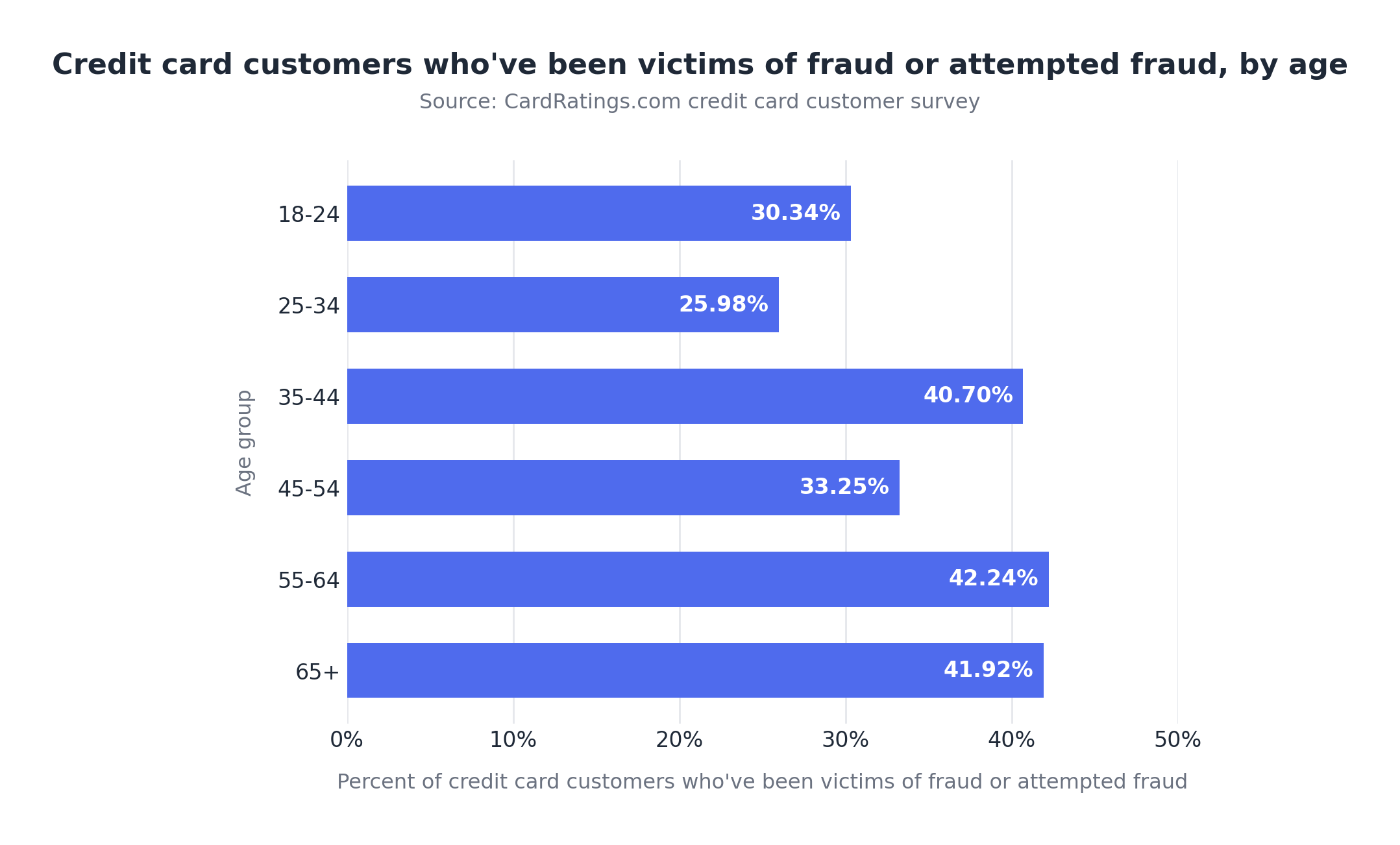
The 55 to 64 age group had the highest incidence of fraud, at 42.24%. The 65-and-over age group wasn’t far behind. On the surface, that may suggest that older credit card users are the most likely targets for fraud. There is some logic to that, since older people have often accumulated more wealth, and some may be having cognitive issues that make them especially vulnerable.
However, it’s also true that older customers are likely to have had credit cards for longer, so there’s been more opportunity for them to experience fraud. That means that younger credit card customers have no reason to be complacent. For some, it’s a matter of fraud not having happened to them yet.
Credit card fraud by income
Naturally, scammers are attracted by money:
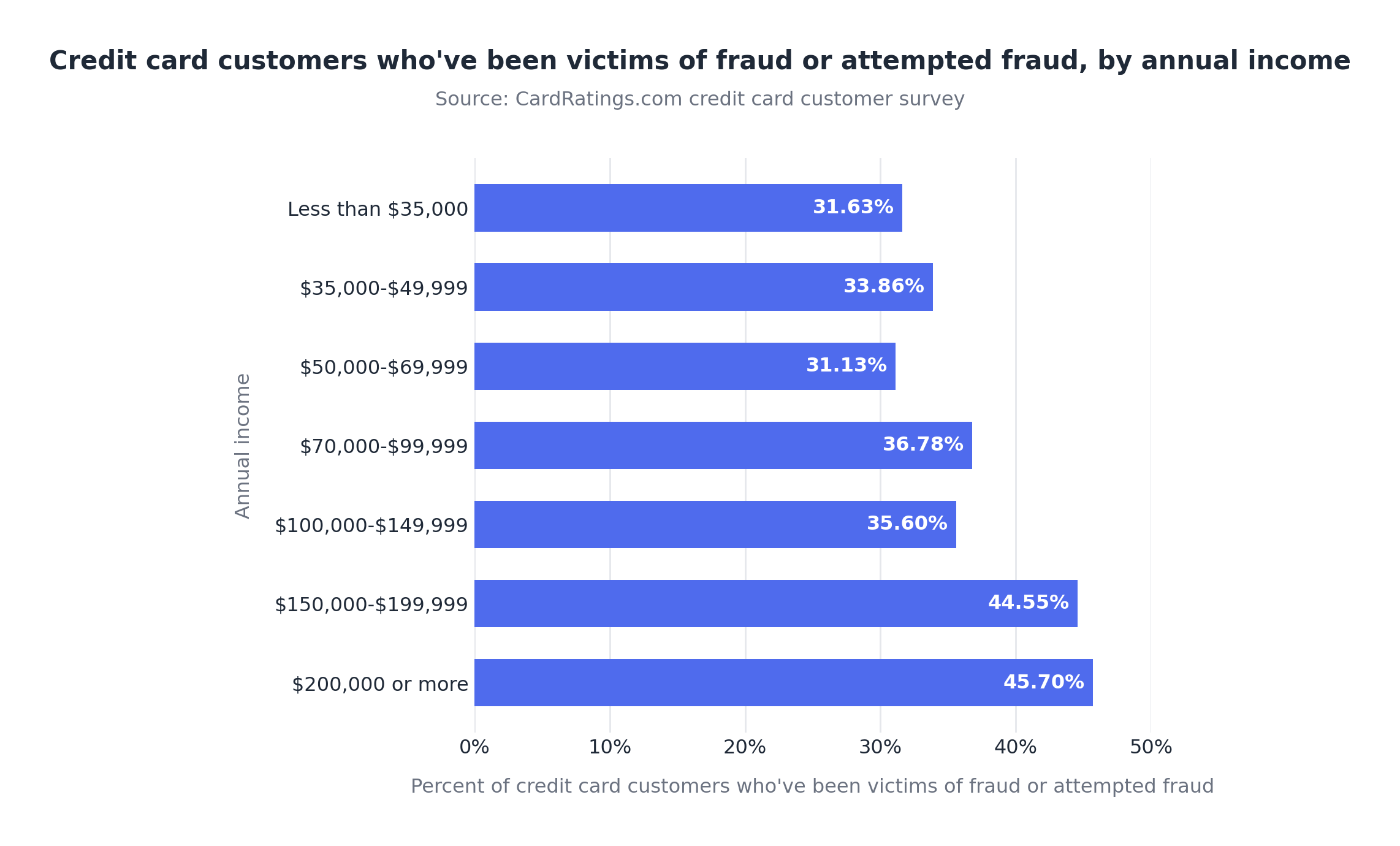
As the chart shows, the CardRatings survey found that incidents of fraud generally increase in higher income groups. They peak at 45.70% for people making $200,000 a year or more.
Even so, while fraud is less prevalent in lower-income groups, it is still at a significant level in each case. No group is below 31%, and for people whose budgets are tighter, it might be harder to recover financially from being defrauded.
How effective are credit card companies at dealing with fraud?
The figures on credit card fraud reinforce the fact that in today’s digital age, there is no shortage of people trying to profit from getting their hands on sensitive financial information. Still, there is some good news.
While 36.11% of respondents to the survey said that someone had at least attempted to use their credit card account fraudulently, just 11.78% of those victims reported that they’d been harmed by the attempt. Types of potential harm include both financial loss and damage to the victim’s credit score.
In a related finding, nearly 88% of fraud victims said they were pleased with how their credit card company helped resolve the situation. That number is almost identical to the percentage that said they were unharmed when someone attempted to defraud their credit card account.
Credit card companies have a legal responsibility to limit a customer’s liability for unauthorized transactions, as long as the customer reports it promptly. On top of that, credit card companies invest heavily in fraud protection technology and detection methods to help reduce fraud.
The survey results show that credit card companies have been effective in protecting their customers from being harmed by fraud. Think of them as an ally in the fight against scammers. If you see a suspicious transaction, or suspect your account information may have been compromised, report it to your credit card company as soon as possible.
Tips for avoiding credit card fraud
The survey found that credit card fraud occurred throughout every age, gender and income classification. In other words, credit card fraud is a genuine threat, so don’t think it can’t happen to you. Here are some tips for avoiding fraud:
- Guard your information carefully. Don’t provide credit card information where someone can overhear you, or to an unknown source online.
- Beware of phishing attempts and other efforts to trick you into providing credit card information. Don’t respond to calls or emails asking for your account number.
- Only do business with online retailers you know and trust, and where you’ve verified the website address.
- Don’t store your card information with online retailers. Yes, doing that can make future transactions a little easier. However, it also creates more places where hackers can access your information.
- Review every statement line-by-line. Fraudulent transactions aren’t always blatantly obvious. One technique scammers use is to use small, innocent-looking transactions to steadily bleed money out of your account over time.
- Watch out for skimmers. These are devices placed on top of credit card readers that electronically steal the information when someone swipes their card. Look for devices that don’t seem to fit right or don’t quite match the surrounding machinery.
- Periodically check your credit reports. Keep an eye out for unauthorized accounts that have been opened in your name.
- If you lose a credit card or think your information has been stolen, report it to the credit card company immediately. This can save you from even partial responsibility for unauthorized charges.
- If you spot an unauthorized transaction, report it immediately. Timely reporting should limit your liability.
Even though the survey found that actual damage from credit card fraud occurred in a small minority of cases, no one wants the risk of that happening or the hassle of dealing with it. Be aware of protecting your information whenever you use a credit card.
Methodology: CardRatings credit card survey
CardRatings.com surveyed over 2,800 active credit card customers across a range of demographic groups about their experiences with credit cards. CardRatings then analyzed the data to identify trends both overall and within specific age, income and gender groups.
Frequently-asked questions about credit card fraud
Am I liable for fraudulent transactions on my credit card?
How likely am I to be a victim of credit card fraud?
What should I do if I see a suspicious transaction on my credit card?
ON THIS PAGE
- Key findings: What the CardRatings survey reveals about credit card fraud
- How commonplace is credit card fraud?
- Who are the most likely targets of fraud?
- How effective are credit card companies at dealing with fraud?
- Tips for avoiding credit card fraud
- Methodology: CardRatings credit card survey
- Frequently-asked questions about credit card fraud


