



New survey data reveals a clear divide in credit card habits: small monthly choices determine who stays trapped in debt and who builds an 800+ credit score — regardless of income.
While higher earnings can make managing debt easier, low income isn’t a barrier to excellent credit. Millions of low- and moderate-income cardholders consistently practice the exact payment behaviors that earn top-tier scores.
Whether you’re looking to boost your score, lower your interest costs, or make your money work harder, seeing how other consumers manage their bills offers clear, actionable strategies you can use on any budget.
What factors actually affect your credit score?
Payment history is the single biggest factor that determines your credit score. That goes a long way toward explaining why strong credit card payment habits are essential to building top-tier credit.
Accounting for 35% of your total FICO score, this single metric tracks whether you pay on time. A payment missed by 30 days or more can immediately drag down your score, while severe issues like bankruptcy or collection accounts inflict far longer-lasting damage.
The impact of good payment habits goes beyond whether or not your payments are on time. With credit cards, you typically have a choice of how much you want to pay each month. In terms of credit scores, this choice makes a difference because the amount that you owe determines 30% of your FICO score.
Both the total amount you owe and the percentage of your available credit that’s in use factor into credit scores. In each case, the faster you pay down your balances, the better it is for your credit score.
This is a big issue because the minimum payment due on credit cards is usually a very small percentage of your total balance. If you pay just the minimum each month, it will take a long time to pay off your balances. In fact, with continued use of the credit card, there’s a good chance that you’ll see your balances rise over time if you just pay the minimum required amount.
So, when it comes to payment behavior and credit scores, there are two things you can do to help your score:
- Make every payment on time
- Pay more than the minimum required amount — and ideally, pay off the whole balance whenever possible
In each case, the CardRatings.com survey found wide differences in the payment approaches people take. Those differences go a long way towards determining who has a good credit score and who has a weak one.
➤ LEARN MORE:What is a good credit score?
Survey data shows big differences in credit card payment habits
The survey found that a clear majority of credit card customers are readily able to keep up with their payments:
- 84% of those surveyed said they’d been able to keep up with their payments
- 10% said they were in danger of missing a credit card payment
- 6% said they’d already missed one or more payments within the last 12 months
Missing payments can be costly in a few ways. It can lead to late fees, which add to the balance you owe. In turn, interest will be charged on that balance, which will result in you owing even more. Finally, the resulting credit damage is likely to mean you’ll have to pay higher interest rates when you use credit in the future.
Besides the question of whether or not people have been able to make payments on time, there are also significant differences in how much money they put towards those payments:
- 48.3% of survey respondents reported that they typically pay their full balance off every month
- 31.4% said that while they don’t typically pay off the full balance, they pay more than the minimum required amount
- 18.1% report paying just the minimum
- 2.2% report paying less than the minimum
These different approaches make a big difference to the cost of using credit. People who pay their full balance off every month can use credit without paying any interest. Those who pay more than the minimum can reduce the amount of interest they pay, even if they can’t pay off the full balance. Finally, those paying less than the minimum may incur late fees and other penalties along with paying interest on their remaining balance.
In addition to the direct cost of missed or low credit card payments, these different consumer credit habits can have an impact on your credit score.
Survey finds a strong link between credit score and payment habits
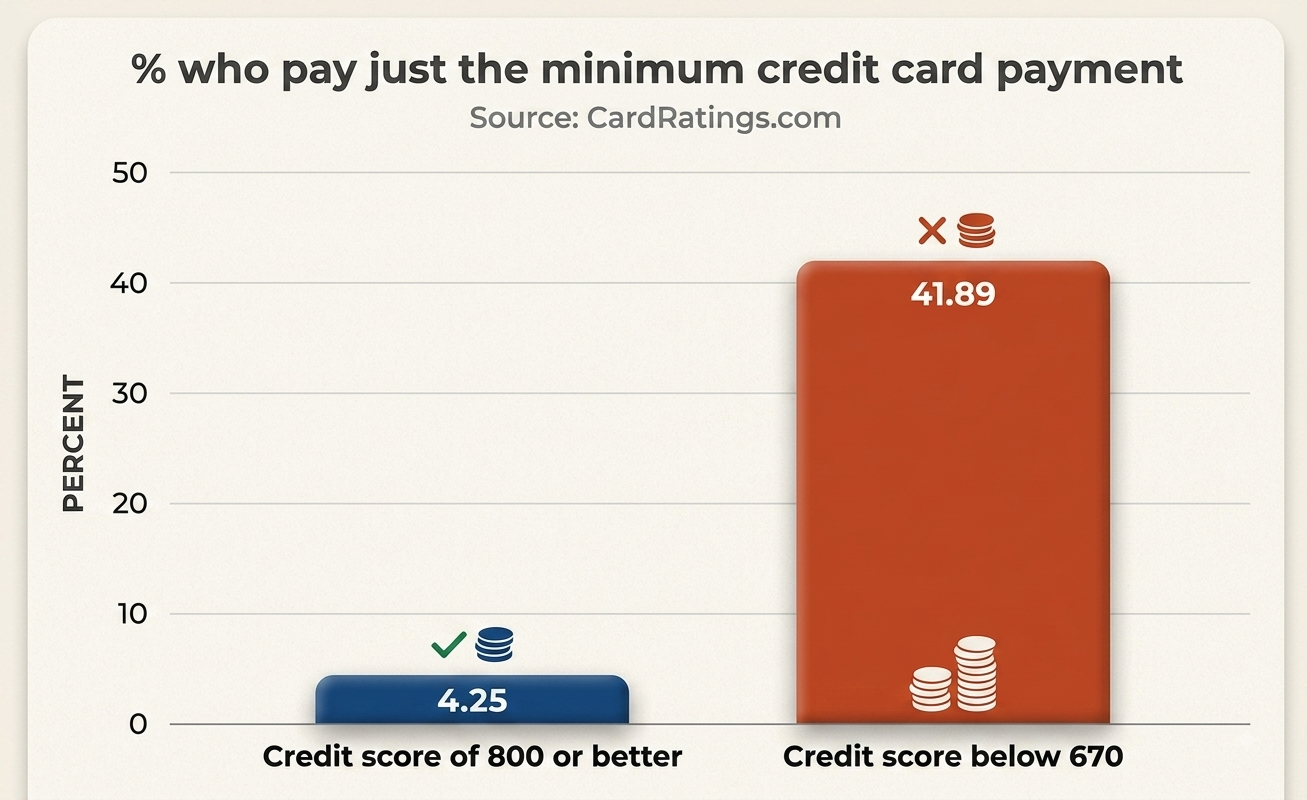
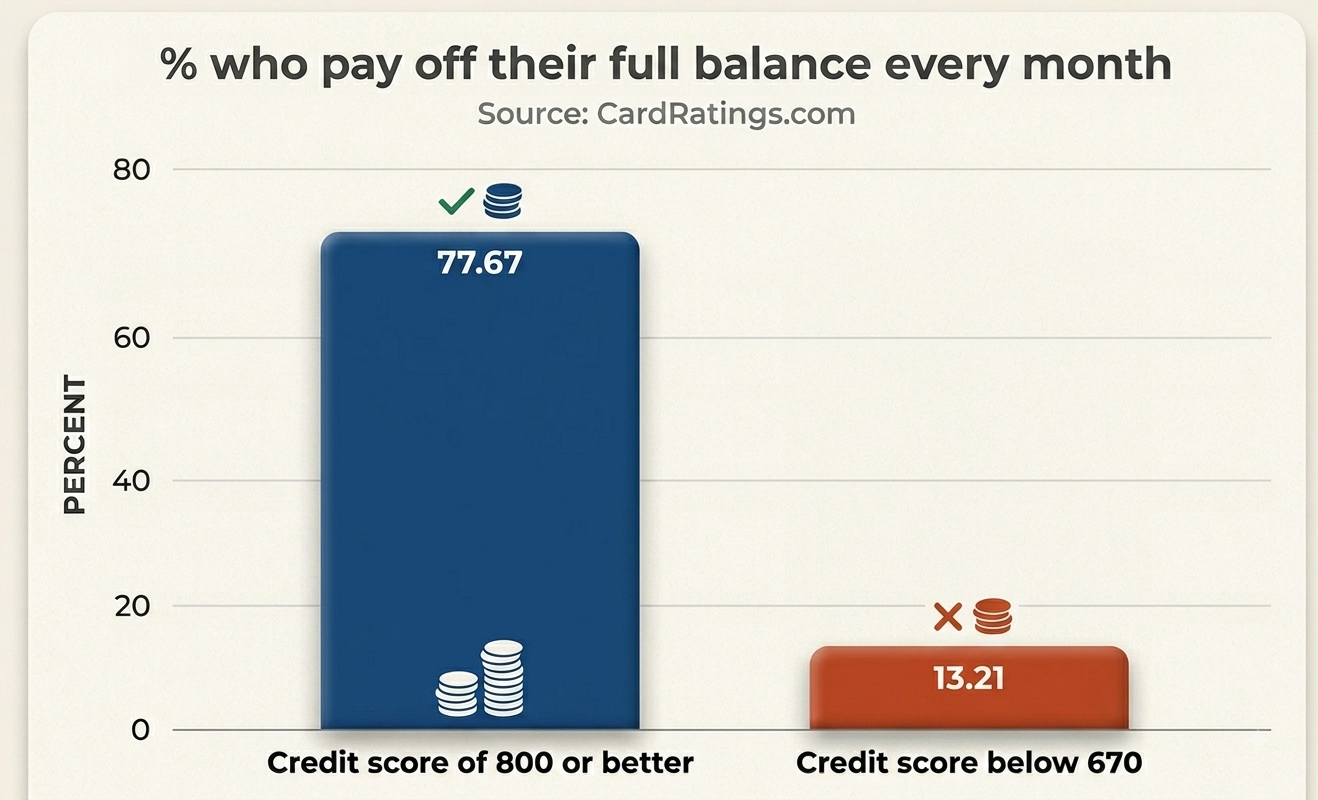
People with excellent credit are far more likely to pay off their credit balances in full every month. In contrast, those with lower scores are much more likely to pay just the minimum.
A Brookings study found that using a typical minimum credit card payment formula, it would take consumers over 11 years to pay off a credit card balance. Of course, if they continued to make new purchases with the card, they might never pay off their balances.
Carrying balances for longer means paying more interest. It also means those higher balances may drag down your credit score. This is one reason the CardRatings.com survey found that paying more than the minimum payment is a habit generally associated with strong credit scores.
The following chart shows that people with credit scores below 700 are roughly 10 times as likely as those with scores of 800 or better to make just the minimum payments:
In contrast, paying the full balance every month is a payment habit more often associated with excellent credit. People with credit scores of 800 or higher are nearly six times as likely as those with scores below 700 to pay off their full balance every month:
Most lower-income households consistently pay more than the minimum
It’s certainly true that earning more money makes it easier to have better credit card payment habits. However, the survey found that you can have good payment habits even on a low income:
- 34% of households earning less than $35,000 typically pay off their full balance every month
- 31% of households earning less than $35,000 pay more than the minimum but less than the full balance every month
- Combined, these figures mean that nearly two-thirds of low-income households make more than the minimum credit card payment every month
- 81% of households earning less than $35,000 have been able to keep up with their credit card payments — that’s not far off the 84% figure for survey respondents overall
In short, while having a lower income can be challenging, it should not prevent you from having good credit card payment habits — and a good credit score as a result.
What you can learn from consumer credit habits
The survey data holds some key takeaways for credit card consumers:
- Paying the full balance, or at least more than the minimum payment, is a habit generally associated with people who have higher credit scores.
- A high income is not necessary to have a good credit score.
- Four out of five households with incomes below $35,000 are able to consistently pay their credit card bills on time.
- Most households earning below $35,000 per year manage to make more than the minimum payments on their credit card bills.
The bottom line is simple: a lower income doesn’t have to hold your credit score back. Because scoring models don’t factor in what you earn, your credit card payment habits remain the ultimate key to a high score.
Practical ways to maintain strong payment habits on any budget
Here are some tips for maintaining the type of payment habits that lead to good credit scores, regardless of your budget:
- It all starts with spending. Spend in proportion to your income and other expenses. You should always budget before you borrow. That’s especially important with credit card borrowing, because credit card interest rates are higher than those for most other major forms of borrowing.
- Have a monthly schedule for when you pay your bills. You should align this with the timing of your paychecks to help make sure money is available. Automated payments are another option, but they’re not ideal for credit card bills because payments are variable.
- Always try to pay more than the minimum payment on each credit card bill, and pay off your full balance whenever possible.
- Keep track of your credit card balances from month to month. If you find those balances rising over time even though you pay your bills every month, it’s time to rein in spending.
- Find the most cost-effective credit card for your needs. Try to use no-annual-fee credit cards unless you’re in a position to get more value out of their rewards and other benefits than the cost of the fee. If you regularly carry a balance, finding the lowest interest rate you can is especially important.
The results from the survey are encouraging. They show that people of all incomes are able to maintain good payment habits and earn solid credit scores. That shows there are no income barriers to using credit responsibly.
Frequently asked questions
How can I tell if I need to improve my credit card payment habits?
What is the link between payment behavior and credit scores?
Why are consumer credit habits important?
ON THIS PAGE
- What factors actually affect your credit score?
- Survey data shows big differences in credit card payment habits
- Survey finds a strong link between credit score and payment habits
- Most lower-income households consistently pay more than the minimum
- What you can learn from consumer credit habits
- Practical ways to maintain strong payment habits on any budget
- Frequently asked questions


